
Europe’s Gas Price Surge Is About to Hit Utility Customer Service
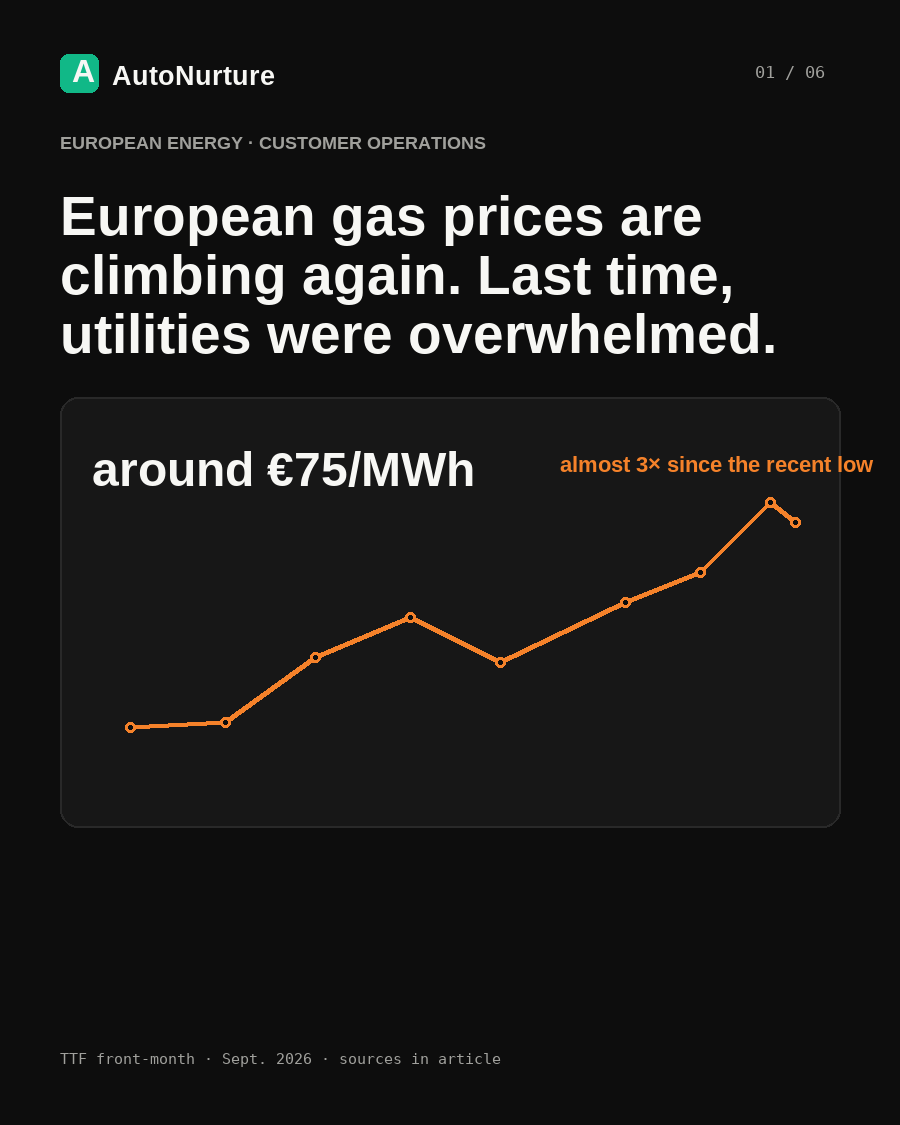
Wholesale gas is near €75/MWh and the ECB says price changes now reach household bills faster. For utility service teams, the operational warning arrives before the first invoice.
The six-page operations briefing
Page 1 / 6
European wholesale gas was trading at around €75/MWh in late September. The exact daily tick matters less than the direction: prices had roughly tripled from their recent trough. The ECB found that gas-price movements now pass into household inflation within one to three months in more than half of euro-area countries. Reuters report on the ECB finding covered that warning on 21 September.
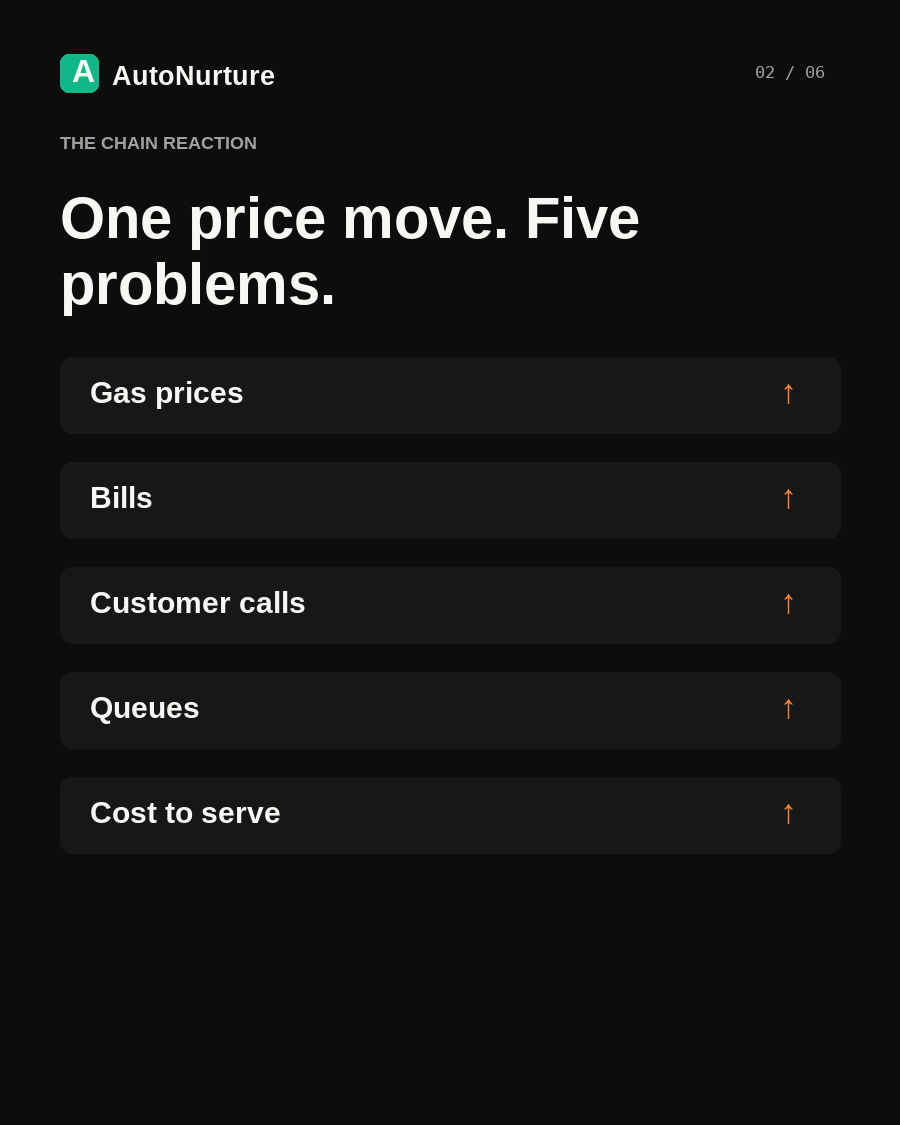
For a utility contact centre, the chain is familiar. Wholesale cost moves. Bills move. Customers call. Queues lengthen. Cost to serve rises. The customer-service impact arrives after the market move but before most workforce plans can react.
The six-page briefing below turns that chain into an operating decision. Swipe it, share it with your operations team, or download the PDF.
The first invoice is your early-warning system
A bill increase does not create one call reason. It creates several at once: “Why did my bill change?”, “Is this estimate correct?”, “Can I move my payment date?”, “What happens if I cannot pay?” and “Can I speak to somebody?” That mix is why price events are harder than a normal seasonal peak.
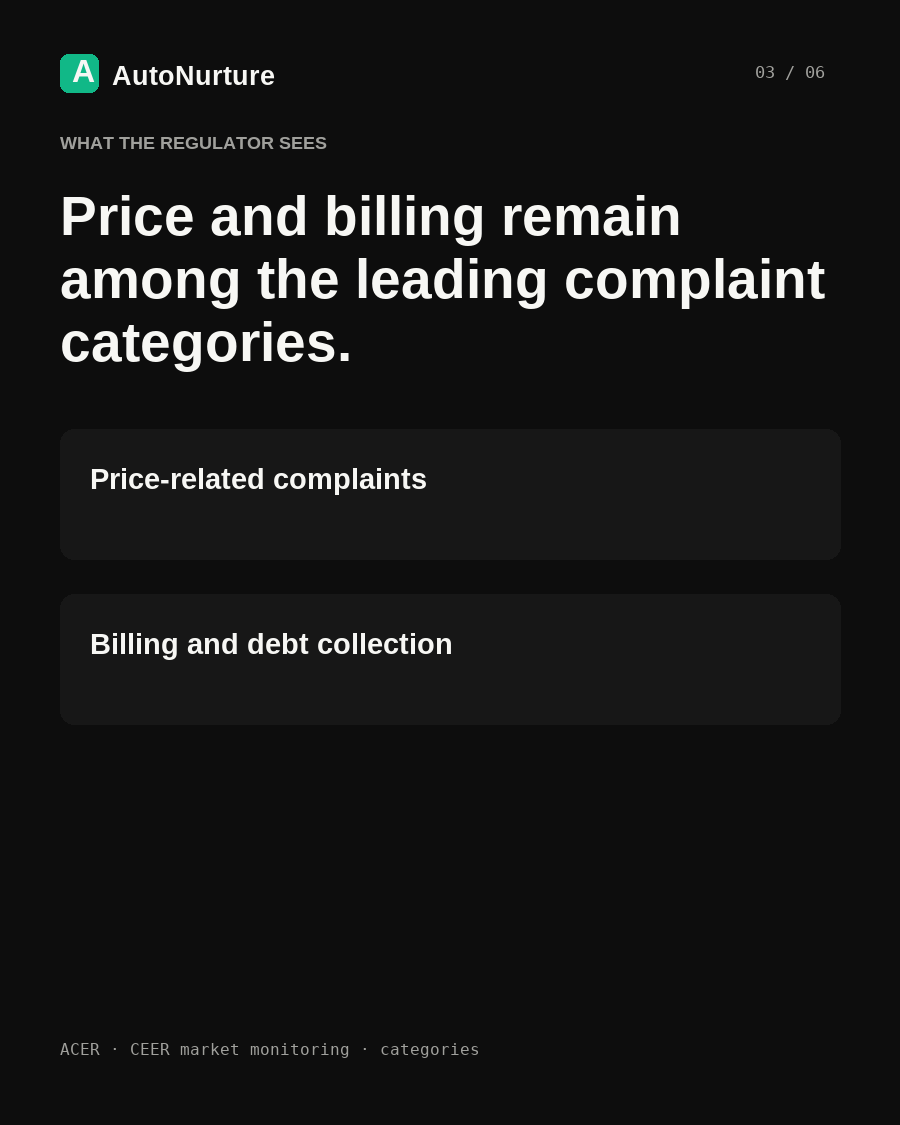
ACER and CEER monitoring consistently treats price, billing, metering, contracts and redress as distinct complaint categories. [[ACER and CEER market monitoring reports]] is useful for the taxonomy, but it does not support the dramatic percentage claims often repeated online. We have therefore kept the briefing to what can be defended: those categories matter, and a price shock pushes several of them at once.
The operational takeaway: do not forecast this as one billing queue. Forecast a cluster of connected intents.
The traditional answer is expensive
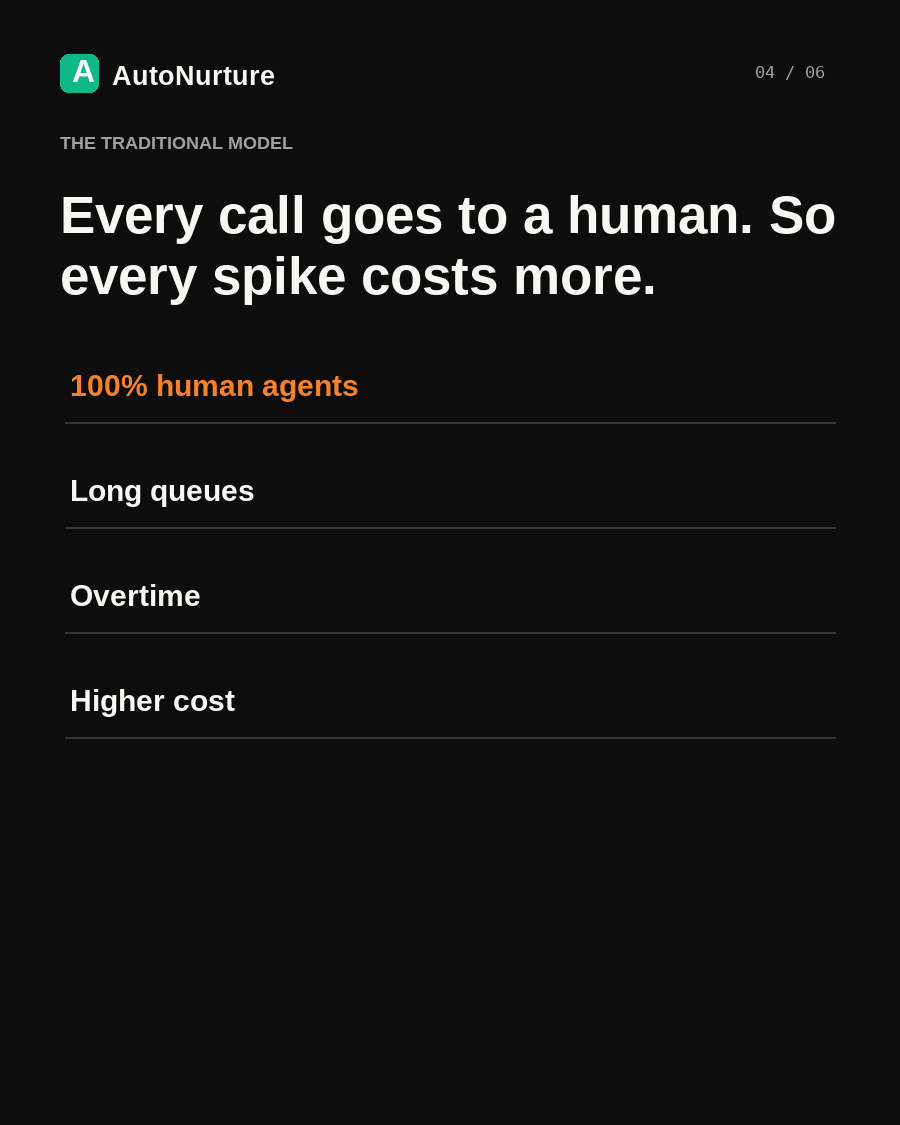
The default response is overtime, temporary seats and longer opening hours. It helps, but every extra contact still starts with the same identification, context gathering and explanation. During a spike, experienced agents spend too much time repeating account facts and too little time on hardship, complaints and exceptions.
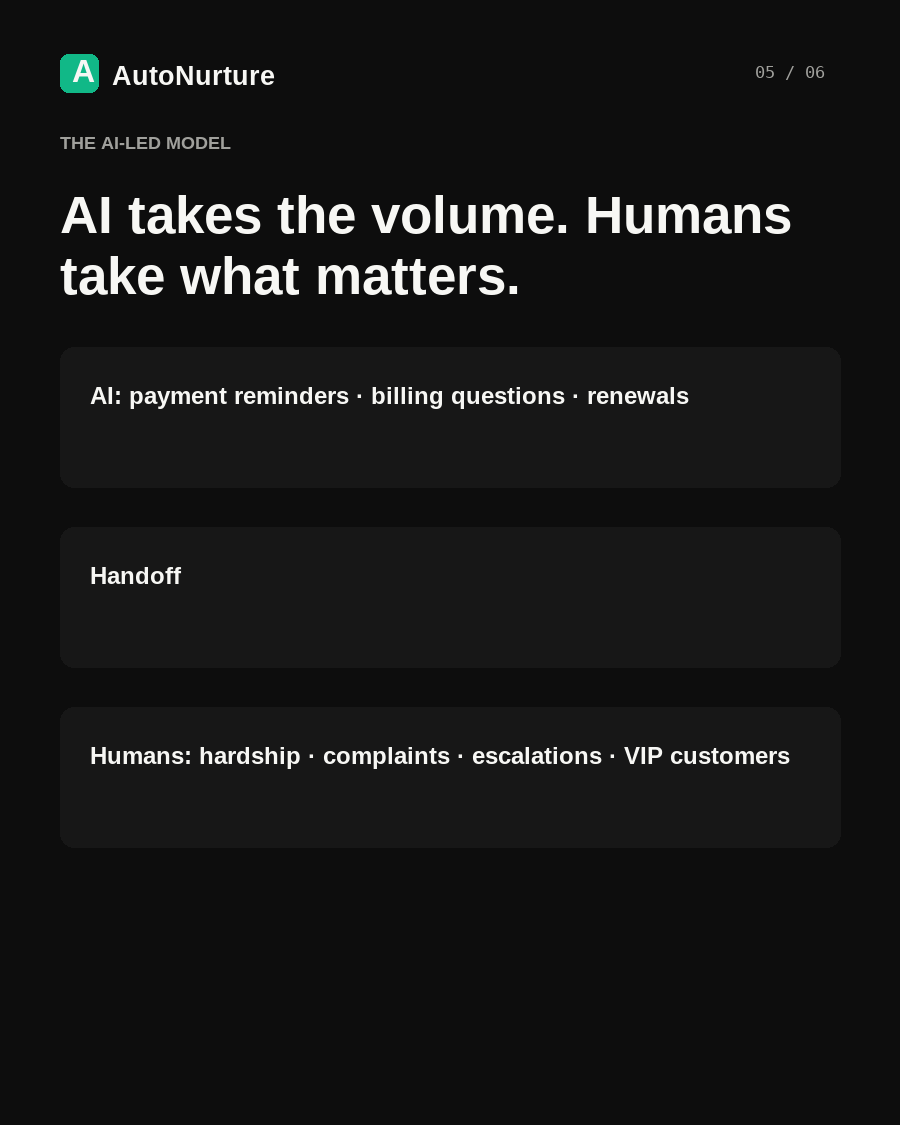
The better split is not “AI or humans”. It is a queue design. AI handles repetitive payment reminders, straightforward bill questions, renewal confirmations and status checks. People retain vulnerability, complaints, negotiation, escalation and high-value accounts.
That boundary matters. Automation should remove waiting and repetition, not remove judgement.
What the production numbers actually mean
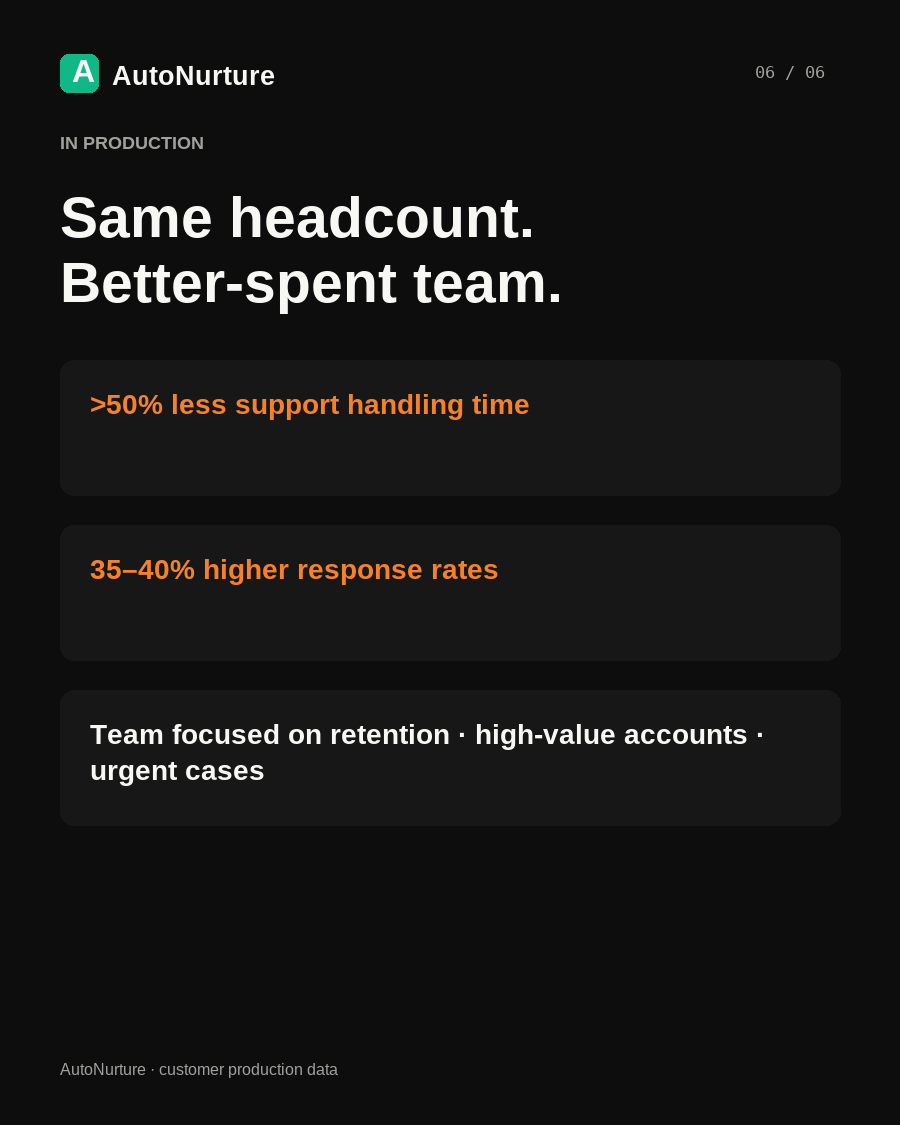
In one live energy-client deployment, AutoNurture reporting showed more than 50% lower support handling time and 35 to 40% higher response rates. Those figures are operational metrics from one production deployment. They are not an industry average, and we are not publishing a sample size, customer identity or measurement window that the client has not approved.
The useful point is what changed around the numbers. The team was repositioned toward retention, urgent cases and high-value accounts. The automation did not make the human team disappear. It changed where their minutes went.
Measure reclaimed agent minutes, not just automated contacts. A bot that closes easy calls but creates repeat calls has moved work, not removed it.
A 14-day preparation plan
- Pull the top ten billing and payment intents from the last comparable price event.
- Split each intent into fixed-path, judgement and regulated-vulnerability work.
- Write the human handoff rule before writing the automation script.
- Baseline answer rate, handle time, transfer rate, repeat contact within seven days and kept payment promises.
- Launch on two fixed-path intents, not the entire billing queue.
- Review failed resolutions daily with operations, compliance and frontline agents.
- Add capacity only after the repeat-contact number holds.
AutoNurture runs AI and human calling on one platform, so a customer can move to a person with the call context intact. If your next billing cycle is already being priced, book a working session before the queue reaches you.
The market signal is already visible. Your staffing plan should not wait for the complaints dashboard.
Frequently asked questions
Does a gas-price increase always create more utility calls?
Not automatically, but material bill changes tend to increase billing, payment and explanation contacts. The timing depends on tariff structure, billing cycle and government support.
Which calls should stay with people?
Vulnerability, complaints, negotiation, exceptions, disputed debt, regulated disclosures and any case where judgement changes the outcome.
Are the handling-time and response-rate figures industry benchmarks?
No. They are reporting from one live production deployment with an energy client, not an industry average.
How soon should a utility prepare?
Before the first affected bill run. Use the available weeks to baseline demand, define handoffs and test two repetitive intents.